

Research
G-Protein Coupled Receptors (GPCRs): The Molecular Sensors of Cellular Communication
Introduction
G-Protein Coupled Receptors (GPCRs) are integral components of cellular signaling, serving as the cell’s primary interface with its external environment. These receptors are not just ubiquitous; they are incredibly versatile, governing a wide spectrum of physiological processes by translating external signals into intracellular actions.
Structural Design
At the heart of GPCR functionality is their distinctive structural design. These receptors are embedded in the cell membrane with seven α-helical segments. This seven-transmembrane domain configuration allows GPCRs to engage with a diverse array of ligands, ranging from small molecules like neurotransmitters to large peptides and even light photons in the case of visual receptors.
Activation Mechanism
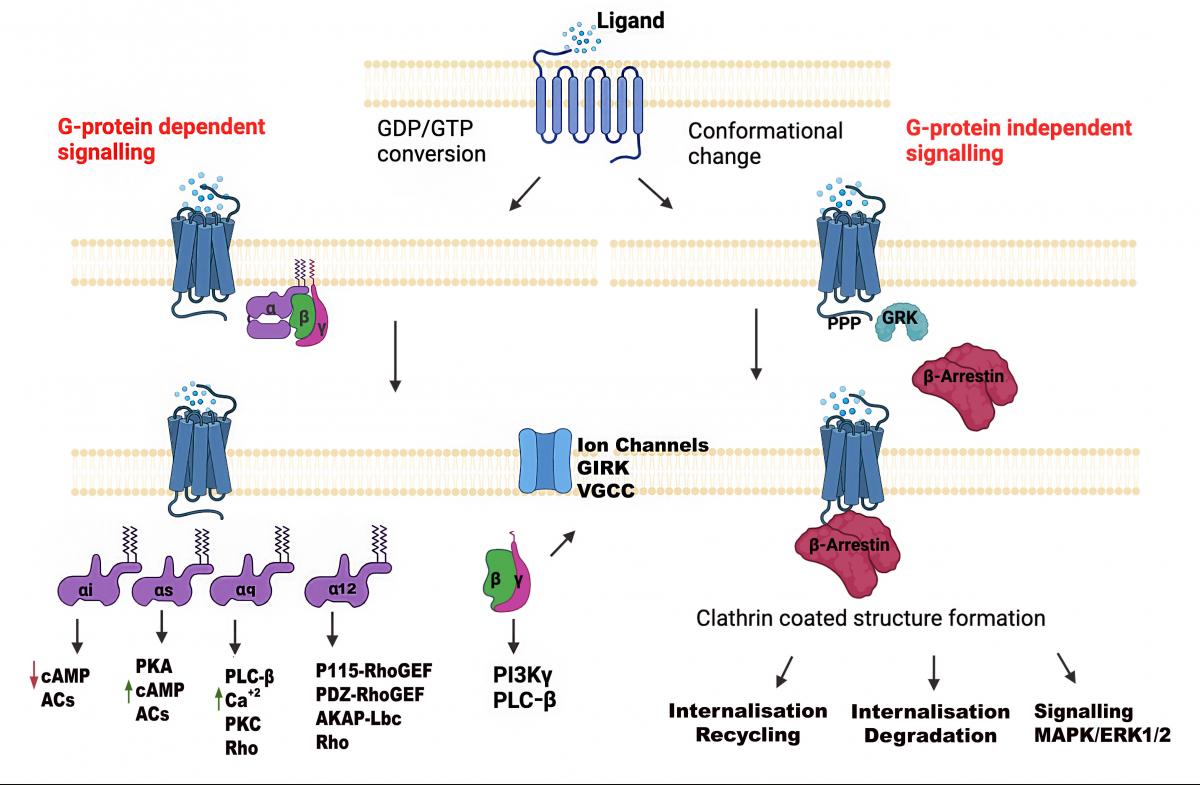
The activation of GPCRs is a sophisticated molecular ballet. Upon ligand binding, the receptor undergoes a structural transformation that activates the associated G-protein complex. This change prompts the exchange of GDP for GTP on the G-protein’s α subunit, causing it to dissociate from the βγ subunits. These liberated subunits then engage with various intracellular signaling molecules, such as adenylate cyclase or phospholipase C, triggering a cascade of biochemical reactions. The result is a dynamic alteration in cellular functions, from metabolic shifts to changes in gene expression.
Biological Impact
- Sensory Perception: They are the molecular basis of sensory systems, translating visual, olfactory, and gustatory stimuli into neural signals.
- Neurotransmission: In the nervous system, GPCRs modulate neurotransmitter release, influencing everything from mood to memory.
- Hormonal Regulation: GPCRs mediate the effects of hormones such as adrenaline and insulin, thus playing a central role in metabolic regulation and stress responses.
- Immune Response: They help orchestrate immune responses by modulating the activity of immune cells and mediating inflammation.
Orphan GPCRs: The Uncharted Territory
Among the GPCR family, there are numerous orphan GPCRs—receptors for which endogenous ligands remain unidentified. Despite their unknown ligands, orphan GPCRs are thought to play significant roles in physiological processes and disease states. Their study is crucial for several reasons:
- Exploring New Pathways: Identifying the ligands and functions of orphan GPCRs could uncover new signaling pathways and biological processes.
- Therapeutic Potential: Orphan GPCRs may represent novel drug targets, offering opportunities for developing new therapies, particularly in areas where current treatments are limited.
- Functional Insights: Research into orphan GPCRs can provide insights into receptor function and regulation that are applicable to better-characterized GPCRs.
Pharmacological Significance
GPCRs are prime targets in drug development, given their extensive involvement in both normal physiology and disease states. Approximately 30-40% of all pharmaceuticals act on GPCRs, making them central to modern medicine. Cutting-edge techniques, including high-resolution crystallography and advanced computational modeling, continue to reveal new facets of GPCR function, paving the way for innovative therapies targeting a wide range of conditions, from chronic diseases to acute illnesses.
G-Protein Coupled Receptors are integral to cellular communication and homeostasis, and their study is vital for understanding complex biological systems. The exploration of orphan GPCRs represents an exciting frontier, with the potential to reveal new aspects of receptor biology and novel therapeutic opportunities. As research progresses, the mysteries of these elusive receptors will continue to enrich our knowledge and enhance the field of pharmacology.
High-Throughput Virtual Screening (HTVS): A Key Tool in Modern Drug Discovery
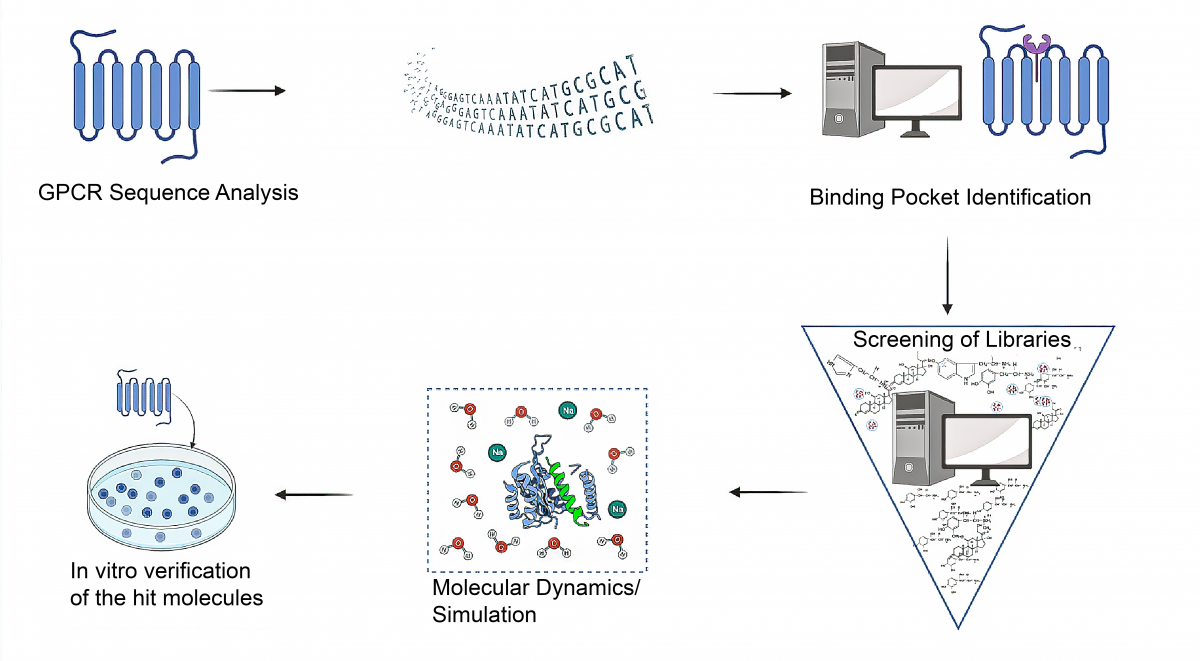
High-Throughput Virtual Screening (HTVS) is an advanced method that allows researchers to quickly evaluate large numbers of compounds for their biological effects. This technology is crucial for accelerating drug discovery and exploring biological functions.
How It Functions
HTVS utilizes automated technology to enhance efficiency:
- Assay Creation: Developing accurate tests to measure biological interactions or activities.
- Automation: Employing robotic systems to manage and process numerous samples swiftly.
- Detection Techniques: Using technologies such as fluorescence and luminescence to capture assay results.
Key Uses
HTVS is instrumental in:
- Discovering Lead Compounds: Screening extensive libraries of compounds to identify those with potential therapeutic effects.
- Validating Targets: Confirming the involvement of specific biological targets in disease mechanisms.
- Uncovering Mechanisms: Investigating how compounds affect biological pathways.
Innovations
Recent improvements in HTVS include:
- Miniaturization: Utilizing smaller, more efficient plates to boost throughput and lower costs.
- Enhanced Data Integration: Combining HTVS with advanced computational tools for better compound analysis.
- Phenotypic Screening: Evaluating the overall impact of compounds on cells or organisms to gain a comprehensive view.
Challenges and Future Prospects
While HTVS has transformed drug discovery, it faces challenges like managing large volumes of data and ensuring assay reliability. Future developments aim to integrate HTVS with genomic and proteomic data to expand its capabilities and precision.
High-Throughput Virtual Screening remains a fundamental technique in drug discovery, facilitating the rapid identification of new drugs and deepening our understanding of biological processes.
Shedding Assay: Investigating Membrane Protein Release
A shedding assay is a sophisticated analytical technique employed to elucidate the mechanisms underlying the release of membrane-bound proteins into the extracellular milieu. This assay is instrumental in examining processes such as cellular signaling, immune modulation, and tumor progression. By quantifying the release of proteins like cytokines and growth factors, researchers can gain valuable insights into their functional roles and potential implications in disease pathology and therapeutic development.
cAMP Assay: Analyzing Cellular Signaling Pathways
The cAMP assay is a critical methodology for the analysis of intracellular signaling pathways involving cyclic adenosine monophosphate (cAMP). This assay measures intracellular cAMP levels to assess the activation of G-Protein Coupled Receptors (GPCRs) and associated signaling cascades. It is widely utilized in pharmacological research and drug discovery to investigate the effects of various compounds on cellular signaling dynamics and to identify new therapeutic targets and strategies.
For the news click here , and here;
To reach BOUN-MBG main page click here.
